The search for healthy and rejuvenated skin is one of the most frequent consultations in my dermatological practice here in the city of Cuenca, Ecuador. Skin aging, exacerbated by the high ultraviolet radiation typical of our geographical location in the Andes, generates common concerns such as spots, deep wrinkles, and loss of elasticity. The CO2 Laser has established itself as the gold standard in facial rejuvenation and the treatment of complex scars. This advanced procedure allows for the transformation of skin texture, removing damaged layers and stimulating the production of new collagen to obtain natural and long-lasting results in patients seeking a comprehensive renewal of their face.
The CO2 Laser is an infrared light system with a wavelength of 10,600 nanometers that acts through the controlled vaporization of water in skin cells. It is a fractional ablative technology that creates micro-columns of thermal damage, allowing for deep regeneration of skin tissue and the tightening of collagen fibers.
What is the CO2 Laser?
The carbon dioxide (CO2) laser is a high-precision medical device that uses a mixture of gases to emit a concentrated beam of light. In dermatology, we primarily use it in ‘fractional’ mode. This means that the laser does not impact the entire skin surface at once, but rather emits thousands of tiny points of light that penetrate the dermis, leaving bridges of healthy skin between them. These areas of unaffected tissue are the key to a much faster and safer recovery compared to older ablative lasers that treated the entire surface equally.
As a dermatology specialist, I explain to my patients in Cuenca that the mechanism of action is based on selective photothermolysis. The laser heats the deep layers of the skin to trigger a natural healing response. During this process, damaged superficial layers are removed, and the synthesis of new collagen and elastin fibers is triggered. According to the American Academy of Dermatology (AAD), the CO2 laser remains one of the most powerful tools for reversing severe photodamage and significantly correcting textural irregularities.
It is important to highlight that the CO2 Laser does not only treat aging. Its versatility allows for the adjustment of the depth and intensity of the light beam to treat various pathologies and aesthetic conditions. In my practice, we adapt the equipment’s parameters according to the patient’s skin phototype, which is crucial in Ecuador due to the ethnic diversity and the mix of pigmentations present in the inhabitants of the Austro region.
In scientific terms, the laser acts on the water chromophore. Since our skin is largely composed of water, the laser instantly vaporizes the tissue in the selected areas. This controlled vaporization removes keratoses, sunspots, and smoothes wrinkle ridges, while the residual heat in the deep dermis produces an immediate and progressive ‘tightening’ effect.
When is it indicated?
The indications for the CO2 Laser are broad, but they always require a prior dermatological evaluation to determine if the patient is an ideal candidate. In my dermatological center in Cuenca, Ecuador, we use this technology primarily for the following conditions:
- Facial Rejuvenation (Resurfacing): Ideal for treating fine and deep wrinkles, especially peribuccal (around the mouth) and periorbital (crow’s feet) lines.
- Acne Scars: It is the treatment of choice for atrophic and ‘ice pick’ scars. It helps level the skin surface and fill depressions through the formation of new collagen.
- Photoaging: Sun-damaged skin, with the presence of actinic spots, solar keratoses, and rough texture.
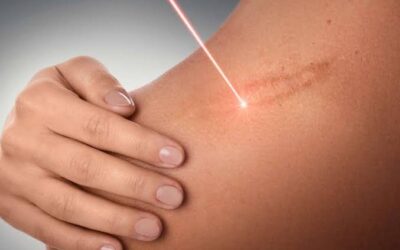
- Surgical or Traumatic Scars: It helps remodel fibrous tissue, improving the appearance and flexibility of the scar.
- Stretch Marks: Although it does not eliminate them completely, the fractional laser significantly improves their texture and color, making them much less visible.
- Syringomas and Xanthelasmas: Small benign lesions around the eyes that can be vaporized with surgical precision.
- Skin Laxity: Provides a moderate tightening effect by contracting the elastic fibers of the dermis.
According to international clinical guidelines, the use of the CO2 Laser is especially effective in patients with light to intermediate phototypes. In Ecuador, where we have a wide variety of skin tones, we perform skin preparation protocols weeks before the procedure to minimize the risk of post-inflammatory hyperpigmentation, thus ensuring the safety of the treatment.
Step-by-step process or treatment
Performing a CO2 Laser treatment requires precision and a rigorous protocol to ensure successful results. Below, I detail the usual process we follow in my clinic:
- Initial Assessment: During the consultation, I analyze the skin type, the degree of sun damage, and the patient’s expectations. This is where we design a personalized plan and rule out contraindications such as recent use of isotretinoin or active herpes simplex infections.
- Skin Preparation: Weeks before, I usually prescribe the use of preparing creams with retinoids or depigmenting agents to optimize the dermis’s response and reduce risks.
- Cleaning and Anesthesia: On the day of the procedure, the face is deeply cleansed and a high-potency topical anesthesia layer is applied. In cases of very deep treatments, we may apply local nerve blocks to ensure total patient comfort.
- Eye Protection: Metal eye protectors or special goggles are placed to protect the vision from the laser light beam.
- Laser Application: I glide the laser head over the areas to be treated. The patient usually feels a sensation of heat or small, quick ‘pricks.’ The fractional equipment allows for efficient coverage of large areas.
- Skin Cooling: Immediately after the pulses, we apply cooling systems (cold air or compresses) to soothe the burning sensation and reduce initial inflammation.
- Post-treatment Application: A generous layer of repairing cream or sterile petroleum jelly is applied, and in some cases, specific dressings to protect the newly treated skin barrier.
This process usually lasts between 30 to 60 minutes, depending on the size of the area to be treated (full face, neck, neckline, or hands). Upon completion, I provide detailed written instructions, as aftercare is 50% of the treatment’s success.
| Feature | Fractional CO2 Laser | Deep Chemical Peel | Microneedling (Dermapen) |
|---|---|---|---|
| Mechanism | Thermal energy and vaporization | Acid chemical exfoliation | Mechanical collagen induction |
| Depth | High and adjustable | Variable/Medium-High | Superficial to Medium |
| Recovery Time | 5 to 10 days | 7 to 14 days | 2 to 3 days |
| Efficacy in Scars | Excellent / Gold Standard | Good | Moderate |
Recovery and care
Recovery from CO2 Laser is a predictable process but requires commitment from the patient. In Cuenca, due to our altitude and the intensity of radiation, I am extremely emphatic about post-procedure care to avoid complications.
‘The skin after a CO2 Laser behaves like a controlled burn. The key to a spectacular result lies in constant hydration and absolute sun protection during the epithelialization phase.’ – Dra. Lorena Villa.
During the first 24 to 48 hours, it is normal to experience intense redness (erythema), heat, and mild swelling. It is common to see a fine ‘grid’ pattern on the skin, which corresponds to the laser’s micro-columns. Between the third and fifth day, the skin begins a peeling process, revealing new, pink, and soft tissue.
Fundamental recommendations for recovery:
- Gentle cleaning: Wash the face only with thermal water or very gentle syndet cleansers, without rubbing.
- Intensive hydration: Apply healing creams with zinc, copper, or hyaluronic acid several times a day. The skin should never feel dry.
- Avoid the sun: It is mandatory to stay indoors for the first 4-5 days. The use of mineral sunscreen (zinc oxide or titanium dioxide) is indispensable even inside the house, reapplying every 3 hours.
- Do not pick scabs: Allow peeling to occur naturally to avoid marks or hyperpigmentation.
- Sleep with the head elevated: This helps reduce facial edema during the first two nights.
Medical follow-up is vital. I usually schedule a review for my patients on the seventh day to evaluate skin regeneration and authorize the return to using makeup or regular routine products, such as those mentioned in my section on facial rejuvenation.
Frequently asked questions
Is it painful?
Thanks to the use of medical-grade topical anesthesia and, occasionally, local infiltrative anesthesia, the procedure is tolerable. Most patients describe the sensation as intense heat or a strong sunburn during the first few hours after treatment. In my practice in Cuenca, we prioritize patient comfort by using cold air systems simultaneously with the laser.
How long does recovery take?
Social downtime is usually 7 to 10 days. During this period, the skin goes through phases of redness, slight darkening, and peeling. By the tenth day, the patient can resume normal activities and use makeup to camouflage the residual pink color, which may persist for a couple more weeks as a sign of collagen regeneration.
Does health insurance cover it in Ecuador?
In Ecuador, the CO2 Laser is usually considered an aesthetic procedure, so most private medical insurance companies do not cover its cost for rejuvenation purposes. However, if the procedure is performed to treat pathological scars, keloids, or suspicious skin lesions, some insurance companies might offer partial coverage. It is recommended to consult directly with your insurer. The exact value of the treatment is defined after a personalized assessment with me.
How many sessions are needed to see results?
For overall rejuvenation, a single session usually offers dramatic and satisfactory changes. However, for deeper conditions such as severe acne scars (a topic you can explore further in acne treatments), 2 to 3 sessions spaced several months apart may be required to achieve complete tissue remodeling.
When to consult Dr. Lorena Villa?
As a dermatologist with years of experience in the city of Cuenca, I recommend consulting when a patient feels that conventional topical treatments are no longer sufficient to improve the quality of their skin. If you have deep wrinkles that do not yield to creams, acne scars that affect your self-esteem, or persistent sunspots, the CO2 Laser can be the definitive solution.
It is essential that this procedure be performed by a medical specialist in dermatology. Inappropriate handling of the laser by untrained personnel can lead to real burns, permanent scars, or chronic spots. In my practice, we perform an exhaustive analysis under Wood’s light and dermoscopy to ensure your skin is in optimal condition for the laser. Patient safety is our absolute priority at every step of the process.
If you are in Cuenca or the southern region of Ecuador and wish to transform your skin’s health with cutting-edge technology, I invite you to schedule an assessment appointment. During this session, we will evaluate your clinical case, discuss expected results, and clear all your doubts about the process. You can find more information and booking channels on my contact page. Together, we will design the treatment plan that best suits your needs and lifestyle, guaranteeing natural results that highlight your authentic beauty.
Remember that according to the World Health Organization (WHO) and the Ministry of Public Health of Ecuador (MSP), the prevention of actinic damage is fundamental in high mountain regions. The CO2 Laser is not only an aesthetic tool but a way to remove cells with accumulated sun damage, contributing to healthier and younger skin in the long term.