Scars are an inevitable part of the body’s healing process after an injury, surgery, or skin condition such as acne. However, for many patients in Cuenca, Ecuador, these marks are not just a physical reminder, but a source of aesthetic and emotional discomfort that affects their quality of life. The formation of fibrous tissue can vary significantly from one person to another, occasionally leading to exaggerated responses from the body, as is the case with keloids. These lesions can cause itching, pain, or even restriction of movement if located in joint areas. Understanding the mechanisms behind tissue repair is fundamental to addressing each case with the most advanced dermatological technology.
Scars are patches of fibrous tissue that replace normal skin after a deep cutaneous injury. A keloid is a variant of abnormal scarring characterized by an excessive and uncontrolled growth of collagen tissue that exceeds the original boundaries of the wound, appearing raised, firm, and often persistent.
What is scarring and why do keloids form?
Scarring is a complex biological process that occurs in the dermis and epidermis to close a wound. This process is classically divided into four phases: hemostasis, inflammation, proliferation, and remodeling. According to data from the World Health Organization (WHO) and clinical guidelines followed in the Ecuadorian healthcare system, the quality of the final scar depends on genetic factors, the anatomical location of the wound, and postoperative care.
When this process is altered, pathological scars arise. It is fundamental to distinguish between the different types of marks I treat in my practice in Cuenca to determine the appropriate protocol:
- Atrophic Scars: These are depressions in the skin caused by a loss of collagen. They are very common after suffering from inflammatory acne or chickenpox.
- Hypertrophic Scars: These are raised lesions that remain within the borders of the original wound. They usually improve over time, although they can be red and itchy.
- Keloids: Unlike hypertrophic scars, keloids extend beyond the initial injury. They are benign tumors of fibrous tissue that do not regress spontaneously and have a high recurrence rate if not managed with specialized techniques.
- Contractures: Common in burns, where the skin tightens and can limit the movement of muscles and tendons.
As a dermatologist, I observe that genetic predisposition plays a crucial role. People with darker skin phototypes have a higher probability of developing keloids due to the response of their fibroblasts (the cells that produce collagen). In our region, the intense solar exposure in Cuenca can also worsen the pigmentation of scars if they are not adequately protected.
| Characteristic | Hypertrophic Scar | Keloid |
|---|---|---|
| Extension | Limited to the wound borders. | Extends beyond the original wound. |
| Evolution | May improve or flatten over time. | Rarely improves without treatment; usually grows. |
| Common Location | Areas of tension (joints). | Earlobes, chest, shoulders, back. |
| Symptoms | Slight itching or sensitivity. | Stabbing pain, intense itching, hypersensitivity. |
When is scar and keloid treatment indicated?
Medical treatment of a scar is not always merely aesthetic. In my clinical practice, intervention is indicated under the following criteria:
- Functional impairment: When the scar restricts the movement of a limb or prevents normal facial expressions.
- Active symptomatology: If the patient experiences pain, burning, or persistent itching that interferes with daily life or sleep.
- Psychological impact: Visible scars on the face or exposed areas can affect the patient’s self-esteem and social interaction.
- Progressive growth: Especially in keloids that continue to expand months or years after the initial injury.
- Acne scars: When the aftermath of previous outbreaks creates irregularities in skin texture that the patient wishes to smooth.
It is important to highlight that early treatment usually offers better results. Waiting until a keloid is massive complicates the prognosis and increases the sessions needed for its flattening.
Step-by-step process or treatment
The approach to scars in my clinic in Cuenca is multimodal. There is no single ‘magic’ treatment, but rather a combination of techniques adapted to each patient. Below, I detail the usual process:
- Initial assessment: I evaluate the age of the scar, its vascularization (red color), thickness, and associated symptoms. At this point, the personalized treatment plan is defined.
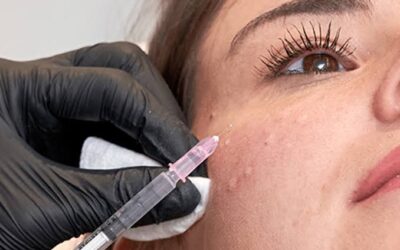
- Intralesional injections: For keloids and hypertrophic scars, we apply medications such as corticosteroids directly into the fibrous tissue. This helps degrade excess collagen and reduce inflammation.
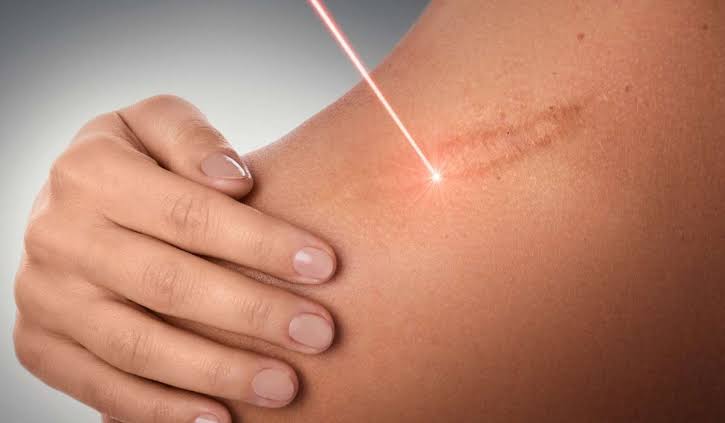
- Laser Therapy: We use cutting-edge technology such as the fractional CO2 laser to remodel the tissue and improve texture. We also use vascular lasers to eliminate redness from recent scars.
- Pressotherapy and silicone sheets: The use of medical-grade silicone patches or gels is indicated to maintain hydration and exert mechanical pressure that helps flatten the lesion.
- Cryotherapy: In certain cases, the use of liquid nitrogen to ‘freeze’ the keloid from the inside can be effective in reducing its volume before other procedures.
- Medical Microneedling: Especially useful in atrophic acne scars, where we aim to stimulate natural collagen production to fill skin depressions.
In cases of recurrent or very large keloids, we may consider surgical excision followed immediately by adjuvant therapies (such as injections or superficial radiotherapy) to prevent the keloid from returning with greater force.
Recovery and care
Recovery depends strictly on the technique used, but there are general rules that every patient must follow, especially considering the climatic conditions of Cuenca, Ecuador. Our city, due to its altitude, has very high ultraviolet radiation levels, which is the number one enemy of a scar in the healing process.
‘Discipline in post-treatment care determines 50% of the final success. A scar exposed to the sun without protection will become permanently pigmented.’
- Strict photoprotection: Use of broad-spectrum sunscreen (SPF 50+) every 3 hours, even on cloudy days.
- Use of silicones: Apply silicone gels or sheets according to the indicated guideline, generally for 12 to 24 hours a day for several months.
- Avoid tension: Do not perform strenuous exercises that stretch the skin in the scar area during the first few weeks post-procedure.
- Constant hydration: Maintain the skin barrier integrity using repair creams recommended in consultation.
- Do not manipulate: It is vital not to pick at scabs or try to ‘squeeze’ the lesion, as this restarts the inflammatory process.
Frequently Asked Questions
Is it painful?
Most treatments are performed with topical anesthesia (creams) or infiltrated local anesthesia to minimize discomfort. In the case of injections, the patient may feel slight pressure or momentary burning. Laser procedures are usually described as small ‘pricks’ of heat, which are very tolerable for the vast majority of people.
How long does recovery take?
Immediate recovery (redness or slight peeling) usually lasts between 3 to 7 days depending on the intensity of the laser or treatment. However, collagen remodeling is a slow process. Definitive results in the texture and color of a scar are observed progressively over 3 to 6 months.
Does health insurance cover it in Ecuador?
In Ecuador, health insurance coverage for scar treatment depends strictly on the nature of the case. If the scar is the result of an accident or previous surgery covered by the policy and causes functional compromise (pain, limitation of movement), some insurances may cover part of the treatment. If the reason is exclusively aesthetic, it is usually an out-of-pocket expense. The feasibility of coverage should be consulted directly with your insurer after receiving my medical report.
Can keloids come back after treatment?
Yes, keloids have a recurrent nature. Therefore, my approach is not just to eliminate them, but to control the skin’s biological response. The combination of surgery or laser with corticosteroid injections and strict follow-up significantly reduces the probability of reappearance, but the patient must be committed to follow-up appointments.
When to consult Dr. Lorena Villa?
It is recommended to seek a dermatological assessment if you notice that a scar is changing color, becoming thicker, causing physical discomfort, or if you simply do not feel comfortable with its appearance. As a specialist, my goal is to offer you the best technological and medical options available in Cuenca to restore the health and harmony of your skin.
Remember that every skin reacts uniquely. During the assessment in my office, we will analyze your medical history, the type of scar, and your expectations. The value of the treatment will be defined in this initial assessment, after determining the number of sessions and the technologies we will use to obtain the best possible result. You can learn more about other procedures to improve the quality of your skin in my dermatological services section.
Do not allow a scar to affect your confidence. With the right treatment and proper care, it is possible to drastically improve the appearance of scar tissue and regain your well-being.