
Skin aging is a complex and multifactorial biological process that manifests through volume loss, the appearance of wrinkles, and the redistribution of facial fat compartments. In my daily practice in Cuenca, Ecuador, I frequently observe how environmental factors, such as the high ultraviolet radiation typical of our altitude, accelerate these changes. Dermal fillers with hyaluronic acid have revolutionized modern aesthetic dermatology, offering a minimally invasive, safe, and highly effective solution to restore facial harmony. This treatment does not only seek to fill furrows but to recover lost structure, giving the patient a rested and natural appearance without the need for surgery.
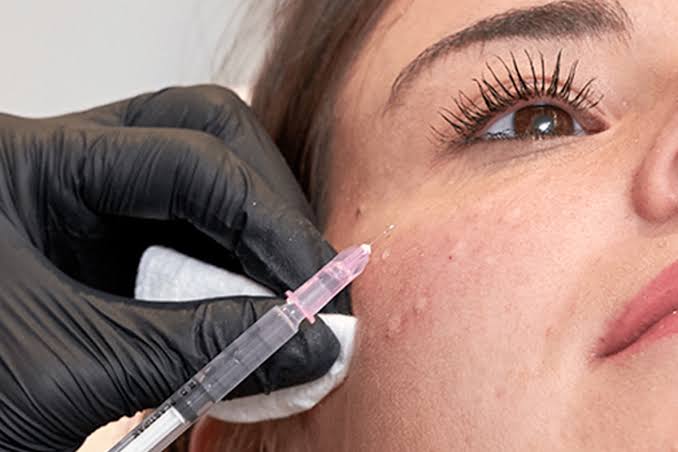
Dermal fillers with hyaluronic acid are injectable substances composed of a natural polysaccharide found in the human body. Their main function is to retain water, provide hydration, and add volume to skin tissues, allowing for the correction of wrinkles, folds, and loss of facial contour in a temporary and biocompatible manner.
What is hyaluronic acid?
From a medical standpoint, hyaluronic acid (HA) is a long-chain glycosaminoglycan present in the extracellular matrix of our skin. Its most notable property is its hygroscopy—that is, its ability to attract and retain up to a thousand times its own weight in water. In aesthetic dermatology, we use a biosynthetic version of this compound that has undergone a cross-linking process, which provides greater durability and stability to the product once injected.
It is fundamental to understand that there are different densities of hyaluronic acid. As a dermatologist, I select the type of HA based on the area to be treated and the necessary depth: low-density gels are used for fine lines and perioral areas, while high-density gels provide structural support in areas such as the cheekbones or chin. Being a biocompatible and biodegradable substance, the risk of rejection is extremely low, making it the ‘gold standard’ of filler materials worldwide.
According to the American Society of Plastic Surgeons (ASPS), hyaluronic acid is the second most performed non-surgical cosmetic procedure globally, due to its safety profile and immediate results.
When is it indicated?
Treatment with dermal fillers does not have a fixed starting age, as each face ages at a different rate influenced by genetics and lifestyle. However, in my practice in Cuenca, the most common indications include:
- Malar volume loss: Restoration of cheekbones that have descended over time, which helps to indirectly lift other facial structures.
- Nasolabial folds: Smoothing the lines that run from the nose to the corners of the mouth.
- Marionette lines: Correction of wrinkles that descend from the mouth toward the chin, which often give a sad appearance.
- Lip harmonization: Volume enhancement, lip border contouring, or correction of asymmetries.
- Non-surgical rhinoplasty: Correction of small irregularities on the nasal bridge or lifting the tip.
- Jawline definition: Ideal for patients desiring a sharper and more youthful profile.
- Deep tear troughs: Filling the under-eye hollows to eliminate a chronic tired look.
It is important to highlight that hyaluronic acid is also used for deep skin hydration (skinboosters), improving texture and luminosity without altering facial volume. This approach is preventive and highly requested by young patients in Ecuador who wish to maintain their skin quality in the long term.
To help my patients better understand the options, I have prepared the following comparative table regarding filler densities:
| Type of Filler | Recommended Areas | Estimated Duration | Main Objective |
|---|---|---|---|
| Low Density | Tear troughs, smoker’s lines, fine wrinkles | 6 to 9 months | Hydration and superficial smoothing |
| Medium Density | Lips, nasolabial folds, marionette lines | 9 to 12 months | Moderate volume and definition |
| High Density | Cheekbones, chin, mandibular angle | 12 to 18 months | Structural support and projection |
Step-by-step process or treatment
As a specialist, I follow a rigorous protocol to guarantee safety and patient satisfaction during the application of dermal fillers. The procedure usually lasts between 30 and 45 minutes and consists of the following steps:
- Clinical Assessment: I perform a comprehensive facial analysis evaluating facial expressions, bone structure, and skin quality. At this stage, we define goals and I explain what results can be achieved.
- Cleaning and Disinfection: Any trace of makeup is removed, and an antiseptic is applied to prevent infections.
- Local Anesthesia: Depending on the patient’s sensitivity, I may apply a topical anesthetic cream or perform local blocks. Most modern products already contain lidocaine to minimize discomfort.
- Product Infiltration: I use very fine-gauge needles or blunt-tipped cannulas. Cannulas are often my preferred choice for large areas, as they reduce the risk of bruising and tissue trauma.
- Molding and Massage: After application, I perform a gentle massage to evenly distribute the product and ensure it integrates naturally with the surrounding tissues.
- Immediate Evaluation: The patient can observe the changes instantly in a mirror, allowing for final adjustments if necessary.
It is vital that this procedure is performed in an accredited medical setting. In my clinic in Cuenca, we comply with all biosafety regulations required by the Ministry of Public Health (MSP) of Ecuador.
Recovery and care
One of the great advantages of this treatment is that it requires no downtime. However, to optimize results and avoid complications, I recommend following these post-procedure instructions:
- First 24 hours: Avoid intense physical exercise, alcohol consumption, and exposure to direct heat sources (saunas, steam rooms, direct sun).
- Inflammation control: It is normal to experience slight swelling or small bruises. Local cold can be applied intermittently during the first day.
- Sleeping position: I recommend sleeping on your back with your head slightly elevated for the first two nights to promote lymphatic drainage.
- Do not massage the area: Unless I expressly instruct otherwise, the patient should not press or massage the treated areas to avoid displacing the filler.
- Sun protection: The use of broad-spectrum sunscreen is mandatory, especially if there are bruises, to avoid post-inflammatory pigmentation.
Definitive results are seen after about 15 days, once the initial inflammatory process has subsided and the hyaluronic acid has captured the necessary water to stabilize in the tissue. Many patients often combine this treatment with other procedures such as comprehensive facial rejuvenation to enhance the overall effect.
Frequently Asked Questions
Is it painful?
Most patients report minimal discomfort. The high-quality fillers I use incorporate anesthetic in their formulation. Furthermore, the use of advanced techniques with microcannulas makes the experience very tolerable and less traumatic than old techniques involving multiple injections.
How long is the recovery?
Recovery is practically immediate. The patient can resume daily activities upon leaving the office. If a bruise appears, it usually resolves within 3 to 7 days and can be easily hidden with dermatological makeup from the next day onward.
Does health insurance cover it in Ecuador?
In Ecuador, private health insurance and the public health system consider hyaluronic acid fillers as aesthetic medicine or elective cosmetic procedures. Therefore, they are generally not covered by standard insurance policies. However, it is always recommended that the patient check the specific terms of their plan.
What happens if I don’t like the result?
This is one of the greatest advantages of hyaluronic acid: its reversibility. If for any reason the patient is not satisfied or an unusual complication arises, we can use an enzyme called hyaluronidase. This substance safely and quickly degrades the filler within hours, returning the tissue to its original state.
When to consult Dr. Lorena Villa?
If you have noticed that your face looks tired, you have lost definition in your cheekbones or lips, or you simply wish to prevent signs of aging, it is the ideal time for an assessment. As a specialist dermatologist in Cuenca, Ecuador, my focus will always be naturalness; my goal is not to transform your face into a different one, but to highlight your best version.
It is crucial to see a specialist if you are considering other complementary treatments, such as collagen biostimulators, to design a personalized and safe treatment plan. The value of each procedure is defined after a thorough assessment in my office, where we will analyze your specific needs, the amount of product required, and the ideal type of hyaluronic acid for your case.
Patient safety is my priority. Therefore, I invite you to schedule an appointment to discuss your concerns and expectations in a professional and honest manner. In our practice in Cuenca, we will provide you with all the necessary information so that you can make the best decision for your health and skin aesthetics.