Skin is the largest organ in our body and acts as our first line of defense against the environment. In my daily practice as a dermatologist in Cuenca, Ecuador—with my office located in the beautiful Athens of Ecuador—I frequently receive patients concerned about benign skin lesions, pre-malignant lesions, or bothersome warts that affect their quality of life and aesthetics. With the climate changes characteristic of the Andean region, our skin experiences various conditions that require precise, safe, and scientifically backed solutions. Modern dermatology offers highly effective outpatient procedures that resolve these issues quickly, minimizing downtime. One of the most versatile, economical, and cosmetically favorable methods we use in the office is dermatological cryotherapy, an established technique that harnesses the therapeutic properties of extreme temperature to destroy abnormal tissue in a controlled and selective manner without the need for invasive surgeries.
Dermatological cryotherapy is a minimally invasive medical procedure that uses extreme cold, commonly liquid nitrogen at an approximate temperature of -196 °C (-321 °F), to freeze and controllably destroy abnormal or injured skin cells, subsequently stimulating the healthy regeneration of the treated skin in the dermatological office.
What is dermatological cryotherapy?
As a dermatology specialist, I explain to my patients that dermatological cryotherapy is much more than the simple application of cold; it is a procedure rooted in physics and cell biology. When we apply liquid nitrogen to the skin lesion—whether via spray or a cotton-tipped swab—we cause immediate thermal damage to the pathological cells.
At the microscopic level, extreme cold generates two phases of tissue destruction. First, intracellular ice crystals form, rupturing the membranes of the diseased cells during freezing. Second, during the thawing process, local microvasculature collapses, leading to ischemia and necrosis of the treated tissue. This process also triggers a controlled inflammatory response that stimulates the immune system, which is especially useful when treating viral lesions such as common or plantar warts. It is a quick treatment that rarely requires local anesthesia, and it excellently preserves the surrounding architecture of healthy skin, significantly reducing the likelihood of hypertrophic scars or permanent marks compared to traditional surgical methods or aggressive electrofulguration.
When is it indicated?
The indications for cryotherapy in dermatological practice are extremely broad, ranging from strictly aesthetic conditions to oncological conditions at very early stages. In my clinic in Cuenca, Ecuador, we use this procedure backed by international clinical guidelines from the American Academy of Dermatology (AAD) and protocols from the Ministry of Public Health (MSP) of Ecuador.
Among the main pathologies we treat with cryotherapy are:
- Viral warts: Caused by the Human Papillomavirus (HPV), including common, plantar, and flat warts.
- Seborrheic keratoses: Very common benign lesions, with a velvety or wart-like appearance, which frequently appear with age or sun exposure.
- Actinic keratoses: Considered precancerous or premalignant lesions, highly prevalent in our city due to the intense ultraviolet radiation of the Ecuadorian highlands resulting from the altitude.
- Solar lentigines: Benign brown spots associated with skin photoaging on the face, hands, and neckline.
- Molluscum contagiosum: A very common childhood viral skin infection.
- Superficial basal cell carcinomas: In selected cases and under rigorous medical evaluation, low-risk non-melanoma skin carcinomas.
To better understand how this procedure differs from other alternatives available in my clinic, I have prepared the following comparative table:
| Feature | Dermatological Cryotherapy | Electrofulguration (Electrocautery) | Surgical Excision |
|---|---|---|---|
| Anesthesia required | Rarely necessary | Generally required (topical or local) | Always required (local) |
| Procedure time | Minutes (5 to 15 seconds of freezing) | 10 to 20 minutes | 20 to 45 minutes |
| Sutures (stitches) | Not required | Not required | Required |
| Scarring risk | Low (possible temporary hypopigmentation) | Moderate (risk of hypertrophy) | Moderate to high depending on the area |
| Work downtime | None | Minimal (1 day) | 3 to 7 days (until suture removal) |
If you have doubts about which method is ideal for your type of lesion, I invite you to learn more about my specialized services by reviewing the dermatological treatments available for the comprehensive care of your skin.
Step-by-step process or treatment
The cryotherapy procedure is performed directly in the medical office and follows a strict biosecurity and patient comfort protocol. Below, I detail the steps we follow during your appointment:
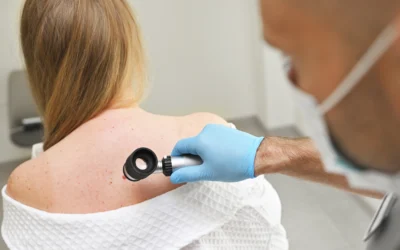
- Prior dermatological evaluation and diagnosis: Before applying any treatment, I thoroughly examine the lesion using dermoscopy to confirm its benign or malignant nature, ruling out absolute contraindications.
- Area preparation: We clean and disinfect the affected skin. On hyperkeratotic lesions (such as hard warts or calluses), we may perform a light prior surface filing to facilitate cold penetration.
- Application of liquid nitrogen: Using a specialized spray device (cryoapplicator) or a cotton-tipped applicator, we administer liquid nitrogen directly onto the lesion. The duration of the application ranges from 5 to 30 seconds, depending strictly on the thickness, size, and type of lesion being treated.
- Freezing and thawing phase: You will notice a white halo of ice formation around the lesion, followed by a burning sensation or intense cold. The tissue thaws gradually within a few minutes.
- Post-procedure instructions: I explain home care instructions to you in detail and, if necessary, we schedule a follow-up appointment in 2 to 4 weeks to evaluate whether a touch-up session is needed.
Recovery and care
Recovery after dermatological cryotherapy is a natural and fascinating process that requires patience from the patient. Immediately after leaving the office, it is completely normal to experience a mild burning sensation or tightness in the treated area, which usually disappears within a couple of hours.
In the first 24 to 48 hours following treatment, a small blister forms (which may be clear or contain hematic fluid/blood due to the rupture of superficial capillaries). This blister is a completely normal and desired inflammatory response; it acts as a natural biological dressing that protects the new skin forming underneath. Under no circumstances should you intentionally pop or puncture the blister, as this significantly increases the risk of secondary bacterial infections.
As the days pass (generally between day 5 and day 10), the blister dries up, turns into a thin crust, and falls off on its own. It is essential to keep the area clean and dry, gently washing with water and neutral soap. In some cases, I prescribe a topical antibiotic or regenerative cream. Avoid direct sun exposure and use an SPF 50+ sunscreen daily to prevent the appearance of dark spots (post-inflammatory hyperpigmentation) or light spots (hypopigmentation). To expand your information on prevention and photoprotection, you can visit our blog on dermatology tips.
How much does it cost in Cuenca, Ecuador?
The cost of dermatological cryotherapy in Cuenca, Ecuador, can vary depending on the complexity of the clinical condition, the number of lesions to be treated, and the technology used at the dermatology center.
As a guide, a standard session in our city usually ranges between $35 and $80 US dollars per consultation and procedure. Some complex lesions, multiple recalcitrant warts, or serial sessions will require a personalized quote that we will gladly evaluate during your first medical visit.
Frequently asked questions
Is it painful?
The procedure produces a sensation of intense cold and a sharp but brief burning sensation, similar to a bee sting or contact with dry ice. The main discomfort occurs during the seconds the freezing lasts and the minutes following thawing, diminishing rapidly. In the vast majority of cases, anesthesia is not required, making it perfectly tolerable even in pediatric patients.
How long does recovery last?
The complete skin healing cycle typically takes between 7 and 14 days. Lesions located on the face heal faster (7 to 10 days) compared to those located on the lower extremities or the soles of the feet (14 to 21 days), due to lesser vascularization and thicker skin in those areas.
Does health insurance cover it in Ecuador?
It depends strictly on your policy and the prepaid medical company you hold. Treatments considered purely aesthetic (such as removal of benign solar lentigines or skin tags without symptoms) are generally not covered by private insurance. However, when cryotherapy is applied for justified medical reasons, such as precancerous actinic keratoses, many insurers fully or partially reimburse medical fees upon formal invoicing.
Are there permanent scars after cryotherapy?
The main objective of the technique is to preserve skin aesthetics. It rarely leaves depressed or hypertrophic scars. However, it is common to observe a temporary change in the coloration of the treated skin: it may temporarily appear lighter (hypopigmentation) or darker (hyperpigmentation), effects that usually normalize naturally over the course of months with proper sun protection.
When to consult Dr. Lorena Villa?
If you have noticed the appearance of new lesions on your skin, persistent warts that do not disappear with home remedies, rough spots that do not heal, or if you want a professional and accurate diagnosis backed by clinical experience, I invite you to schedule an appointment at my dermatology office in Cuenca, Ecuador. Do not risk the health of your skin with empirical methods or unsupervised treatments. As a specialist, I am here to provide you with ethical, personalized care of the highest scientific quality. You can get in touch directly through our official website at schedule a medical appointment to take care of your skin health as you deserve.