Melanoma is one of the most aggressive and dangerous skin cancers we face daily in my dermatology practice in Cuenca, Ecuador. Unlike other types of skin cancer, it has a high capacity for metastatic spread if not detected and treated in time. Living in the Ecuadorian Andes exposes us to extremely high levels of ultraviolet radiation due to the altitude, which significantly increases the risk to our skin. As a dermatologist, my primary mission is to educate my patients about the capital importance of prevention and early diagnosis. Implementing proper photoprotection measures not only drastically reduces the incidence of this disease, but it literally saves lives. Through this article, I want to guide you step-by-step on how to protect yourself, what signs to look for, and why regular check-ups with a specialist make all the difference in your overall health.
Melanoma prevention is the set of medical strategies, daily habits, and self-examinations aimed at preventing the appearance of this skin cancer or detecting it at its earliest stage. It includes the daily use of sunscreen, avoiding sun exposure during peak hours, and performing regular dermatological check-ups to identify suspicious lesions before they become invasive.
What is melanoma prevention?
Melanoma prevention encompasses all proactive and clinical actions designed to minimize the risk of developing this malignant tumor derived from melanocytes, the cells responsible for skin pigmentation. In my medical practice in Cuenca, I insist that this prevention is divided into two main pillars: primary prevention, which seeks to avoid cumulative sun damage through the consistent use of sunscreens, hats, UV-protected glasses, and the avoidance of tanning beds; and secondary prevention, focused on early diagnosis through monthly self-examination and total body digital mapping or dermoscopy with a certified dermatologist. According to the World Health Organization (WHO) and the Ministry of Public Health of Ecuador (MSP), excessive exposure to ultraviolet radiation is the most important preventable risk factor for the development of skin cancers. Therefore, adopting these protective practices from childhood is essential to reduce the incidence and mortality associated with this pathology in our Andean population.
When is it indicated?
Melanoma prevention measures are indicated for absolutely everyone, regardless of their skin phototype, age, or gender. However, there are certain population groups that require a much stricter and more rigorous preventive approach under direct dermatological supervision in my clinic in Cuenca.
- People with multiple nevi (moles): Having more than 50 common moles or the presence of atypical (dysplastic) moles considerably increases the risk of malignant transformation.
- Family or personal history: Patients who have previously had melanoma or whose immediate family members (parents, siblings, children) have suffered from this disease.
- Fair phototypes: People with fair skin, light eyes (blue or green), blonde or red hair, who burn easily and tan with difficulty.
- History of severe sunburns: Having suffered sunburns with blisters during childhood or adolescence.
- Prolonged occupational or recreational exposure: People who work outdoors or practice sports under the sun without proper protection, a very common situation in the Ecuadorian highlands due to high solar radiation.
- Immunosuppressed patients: People who take immunosuppressive drugs or have conditions that weaken the immune system.
Step-by-step process or treatment
Prevention and early clinical management of melanoma follow a structured medical protocol that guarantees maximum safety for the patient. When you come to the clinic for a preventive evaluation, we follow this step-by-step process:
- Detailed medical history and risk factor assessment: We analyze your medical and family history, sun exposure habits, and lifestyle to determine your personal risk level.
- Complete dermatological physical examination: I perform a thorough review of the entire cutaneous surface, including hard-to-reach areas such as the scalp, interdigital spaces, and the soles of the feet.
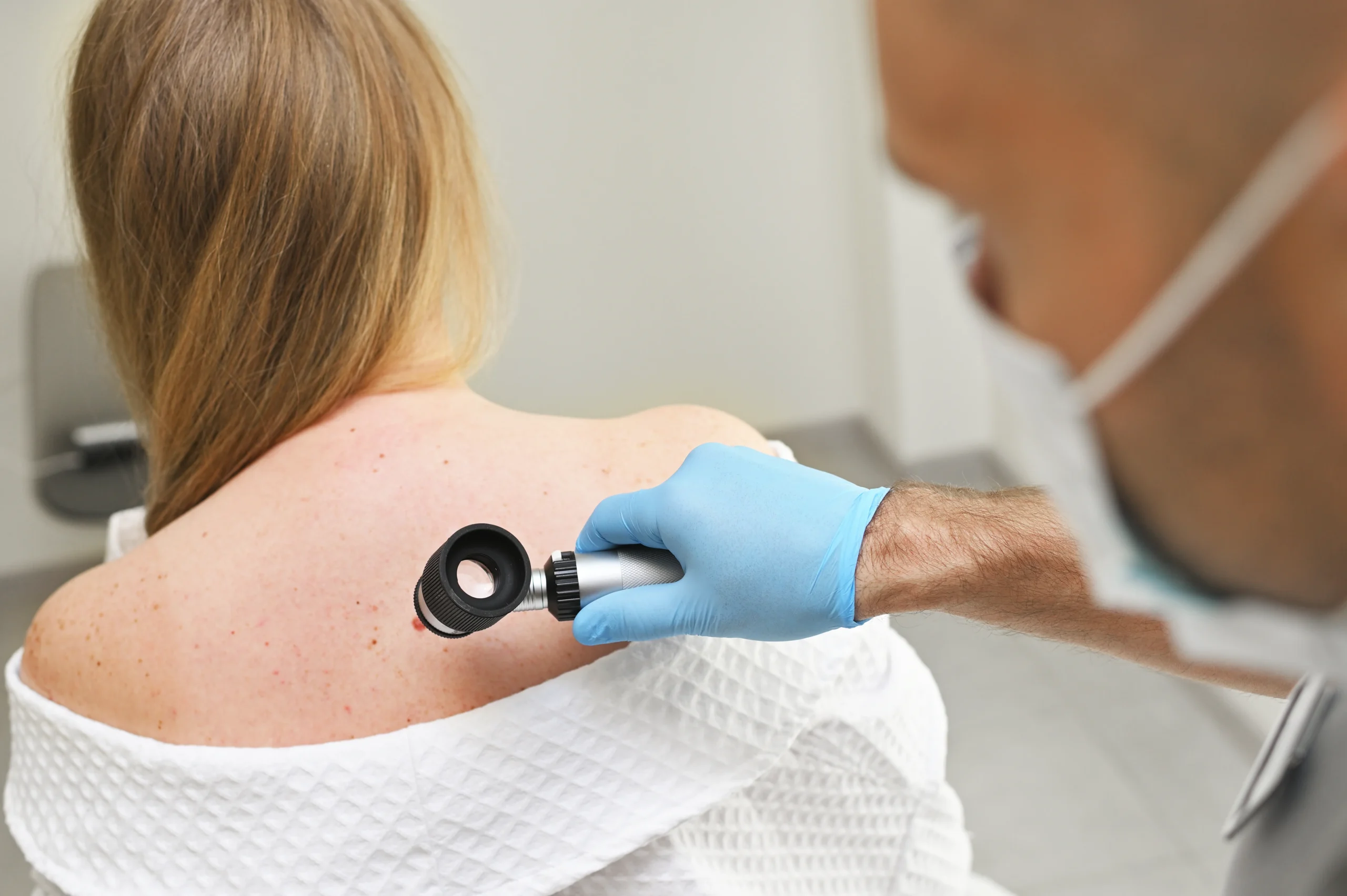
- Advanced dermoscopy: I use an optical and digital dermatoscope to examine the microscopic structures of moles and spots, allowing me to identify malignant patterns invisible to the naked eye.
- Digital total body mapping (when indicated): In high-risk patients, we photographically record all lesions on the body to compare millimeter-level changes in subsequent appointments.
- Diagnostic skin biopsy: If a lesion presents suspicious criteria for melanoma, a biopsy (excision or incision depending on the case) is performed under local anesthesia to confirm the diagnosis through histopathological study.
- Personalized education on photoprotection: I provide you with an adapted guide on which sunscreen to use according to your skin type, the frequency of reapplication, and best practices for your daily life in Cuenca. To learn more about this care, you can review my recommendations on advanced photoprotection.
Recovery and care
When preventive measures and timely check-ups allow for the detection of premalignant lesions or in-situ melanomas in early stages, excision procedures are outpatient and recovery is extremely fast and simple. Following minor surgery or a skin biopsy, it is essential to strictly follow postoperative care to ensure aesthetic healing and prevent infections.
During the first few days, the area must be kept clean and dry, applying the creams or ointments prescribed during the consultation. It is vital to avoid direct sun exposure on the fresh wound to prevent post-inflammatory hyperpigmentation or hypertrophic scars. Likewise, it is recommended to suspend intense physical activities that strain the skin in the intervened area for the time indicated. To learn more about how we treat skin lesions and post-care, I invite you to read about our comprehensive dermatological treatments. The key to long-term success lies in maintaining annual or biannual dermatological check-ups according to individual risk.
To help you differentiate a benign lesion from a warning sign, I present below a comparative table based on the ABCDE rule of melanoma:
| Characteristic | Benign Moles (Common) | Warning Signs (Melanoma) |
|---|---|---|
| A – Asymmetry | Symmetrical; if you draw a line down the middle, both halves match. | Asymmetrical; one half does not match the other. |
| B – Border | Regular, well-defined, and uniform. | Irregular, blurred, notched, or scalloped. |
| C – Color | Uniform, generally a single shade of brown or tan. | Varied; a mix of shades of brown, black, red, white, or blue. |
| D – Diameter | Generally less than 6 millimeters (the size of a pencil eraser). | Greater than 6 millimeters, although they can occasionally be diagnosed while smaller. |
| E – Evolution | Stable over time, with no changes in size, shape, or color. | Any recent change in size, shape, color, or the appearance of symptoms such as itching or bleeding. |
How much does it cost in Cuenca, Ecuador?
The cost of melanoma prevention and diagnosis in Cuenca varies depending on the type of service required. A general evaluation and dermoscopy dermatological consultation usually ranges between 40 and 70 US dollars. If advanced digital body mapping is required, the cost can be between 80 and 150 dollars due to the specialized technology. In case a skin biopsy is necessary to rule out melanoma, the value of the minor surgical intervention and the histopathological analysis by pathology generally ranges between 120 and 250 dollars. These prices are indicative and may be adjusted according to the complexity of the case and the specific clinic.
Frequently Asked Questions
Is it painful?
No. Preventive exams, dermoscopy, and body mapping are completely painless, as they consist of a visual examination with optical instruments that do not touch or injure the skin. If a biopsy is required, local anesthesia is applied beforehand, so the procedure itself is painless for the patient.
How long does recovery take?
If we are talking about prevention and check-ups, there is no recovery time. If we refer to the removal of a suspicious lesion via biopsy, superficial skin healing takes approximately 7 to 14 days, depending on the anatomical area where the procedure was performed.
Does health insurance cover it in Ecuador?
Coverage depends entirely on your prepaid medicine policy or private insurance. Generally, preventive specialty consultations and diagnostic procedures such as biopsies have partial or total coverage under reimbursement, subject to the terms and deductibles of your insurance contract.
How often should I get a mole check?
As a general rule, I recommend an annual dermatological check-up for the general population. However, if you have a family history of melanoma, multiple atypical moles, or elevated risk factors, check-ups should be done every 6 months or according to the specific guideline we establish in my practice.
When to consult Dr. Lorena Villa?
You should come to my dermatological consultation in Cuenca immediately if you notice the appearance of a new mole that looks different from the rest, if any of your previous moles begin to rapidly change in shape, size, or color, or if you experience local symptoms such as persistent itching, pain, swelling, or spontaneous bleeding in a skin lesion. Likewise, if you have never had a full-body preventive dermatological evaluation or belong to a risk group due to chronic sun exposure, scheduling a check-up in time is the smartest decision to protect your skin health. To coordinate your appointment and learn more about our location, you can directly visit the contact and medical appointments section.
Prevention and early detection are our best weapons against melanoma. Taking care of your skin today is guaranteeing your health and well-being for tomorrow in our beautiful Cuenca.